


Key Takeaways:
- Digital signage enhances parking efficiency and user experience.
- Integration with innovative technologies offers real-time data and dynamic pricing.
- Future trends include AI-driven systems and eco-friendly solutions.
Table of Contents
- Introduction
- Enhancing Parking Efficiency
- Improving User Experience
- Integrating Smart Technologies
- Implementing Dynamic Pricing
- Future Trends in Digital Signage
- Conclusion
Introduction
As urban populations continue to grow rapidly, drivers are finding it increasingly difficult to locate available parking spaces. The rise of digital signage is addressing these challenges by offering real-time, location-specific guidance and information as soon as drivers enter parking areas. Using parking garage signage for improved navigation and user experience is establishing new benchmarks in urban mobility, helping operators manage facilities more efficiently while simplifying parking for everyday users.
Today’s parking facilities use digital signage not only to direct traffic but also to provide essential updates, facilitate payments, and enhance support services. This move toward integrated, data-driven solutions is fostering environments that are safer, less congested, and more user-friendly for both operators and the public.
These innovations form a key component of smarter cities, where real-time communication and seamless connectivity are essential for handling growing urban demands. Beyond convenience, they also improve revenue management and support more sustainable, eco-friendly transportation systems.
Enhancing Parking Efficiency
Efficient parking has a direct impact on traffic flow, urban safety, and overall visitor satisfaction. Digital signage strategically positioned at facility entrances, exits, and key internal decision points delivers real-time data on space availability. This immediate feedback not only minimizes the time drivers spend searching for a spot but also significantly reduces traffic bottlenecks around high-demand areas. Digital wayfinding systems have demonstrated measurable improvements in traffic congestion and parking efficiency, a movement supported by data from several municipal pilot programs.
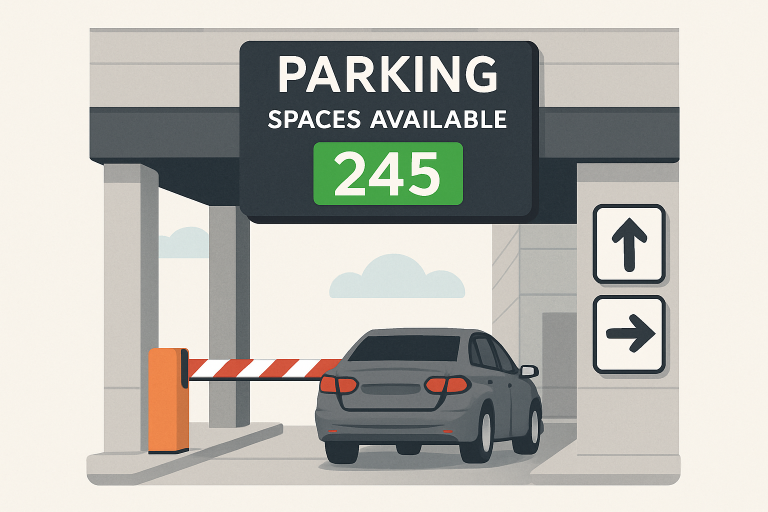
Automated guidance reduces human error, ensuring that facilities are used to their fullest potential. Operators also benefit from these systems, as digital signage can be monitored and adjusted remotely, enabling real-time responses to fluctuating demand.
Improving User Experience
Digital signage systems are redefining the parking experience by offering intuitive, visual directions and critical notifications the moment drivers arrive. By communicating space counts, expected wait times, and floor-by-floor availability, these displays save visitors considerable time and frustration. Furthermore, digital signage can relay safety messages, local promotions, and emergency alerts, delivering added value throughout the customer journey.
For drivers unfamiliar with a particular facility or when attending major events, this proactive communication is beneficial, removing uncertainty and enhancing overall satisfaction. As the competitive landscape for parking intensifies, such user-centric experiences are rapidly becoming standard expectations.
Integrating Smart Technologies
The leap from static digital signs to fully integrated smart signage is reshaping the nature of parking management. When paired with sensors and cloud-connected analytics platforms, digital signage can interact seamlessly with mobile applications, offering touchless payment, automated billing, and instant push notifications when parking spaces become available. This integration not only streamlines operational processes but also empowers drivers with information at their fingertips, resonating with the expectations of modern, tech-enabled communities.
Incorporating Internet of Things (IoT) devices allows facility managers to view real-time metrics and instantly broadcast tailored messages to different facility zones. These advancements pave the way for personalized parking experiences and scalable solutions that can adjust to the unique challenges of each location.
Implementing Dynamic Pricing
Dynamic pricing, enabled by real-time monitoring and digital displays, allows operators to adjust rates in response to shifting demand, special events, or peak travel periods. Digital signage is vital in transparently displaying these rates and communicating fluctuations to drivers in advance. With this adaptable approach, parking operators maximize revenue, drivers make informed choices, and congestion at peak times is better managed. Integrating dynamic pricing models enhances operational flexibility, provides consumers with clearer insight into their options, and promotes optimal turnover in high-traffic urban areas.
Future Trends in Digital Signage
AI and Predictive Analytics
Artificial intelligence and machine learning are the next frontiers in intelligent parking management. By examining historical and real-time data, AI algorithms can forecast high-demand periods, predict lot occupancy, and recommend timely interventions, such as rerouting flows or incentivizing parking at underused locations. This ability to anticipate rather than simply react sets a new standard for operational excellence.
Sustainability and Green Initiatives
The integration of eco-friendly solutions is also gaining momentum, with digital signage using energy-efficient LEDs, solar panels, and recyclable materials. Furthermore, digital signage can support electric vehicle (EV) adoption by guiding drivers to available charging stations, furthering citywide efforts to cut emissions and increase sustainable mobility options.
Conclusion
The rise of digital signage in parking facilities marks a pivotal step toward more intelligent, more sustainable urban mobility. By automating communication, supporting dynamic pricing, and delivering a streamlined, informative user experience, these systems bridge the gap between rising demand and efficient, scalable management. As AI and green technologies continue to mature, digital signage will remain at the heart of future-ready parking operations, elevating the daily lives of city dwellers and visitors alike.