

Key Takeaways
- Advancements in alloy steel are driving innovation across the automotive, construction, and energy sectors.
- Sustainable manufacturing practices are becoming integral to alloy steel production.
- Integration of smart technologies is enhancing the functionality and monitoring of alloy steel structures.
Table of Contents
- Automotive Industry: Driving the Demand for High-Strength Alloys
- Construction Sector: Building the Future with Durable Materials
- Energy Sector: Powering the Transition with Advanced Alloys
- Sustainable Manufacturing: Green Steel Initiatives
- Smart Technologies: Enhancing Alloy Steel Applications
- Conclusion
Alloy steel continues to serve as a foundational material across numerous industries, thanks to its enhanced strength and adaptability. These qualities have become increasingly vital as sectors like automotive, construction, and energy rapidly evolve. New developments in 4150 alloy steel have made this material an even more compelling choice for demanding applications requiring durability, high performance, and safety. With the push toward greater technological innovation and the global focus on sustainable development, industries are rethinking how to leverage alloy steel, not only to meet rigorous technical demands but also to align with ambitious environmental goals. Whether it’s the electrification of vehicles or the construction of climate-resilient infrastructure, alloy steel is positioned at the heart of industrial transformation.
In recent years, advancements in processing and metallurgy have unlocked new properties in alloy steels, delivering lighter yet stronger materials that support fuel efficiency and increased load-bearing capabilities. This evolution is helping manufacturers create products that are both robust and cost-effective, keeping pace with the expectations of industry and regulatory bodies. As infrastructure modernization and clean energy initiatives accelerate globally, engineers are pursuing materials that will ensure longevity and reliability amid harsher environmental conditions and stricter safety standards. Alloy steel continues to rise to the challenge, cementing its status as a crucial driver of innovation in the 21st century.
Automotive Industry: Driving the Demand for High-Strength Alloys
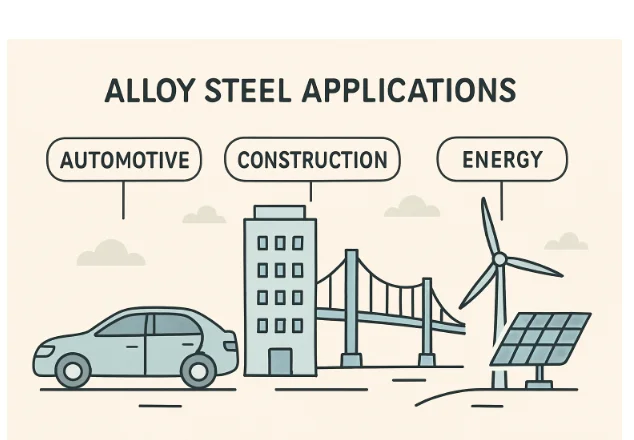
The automotive industry is experiencing a profound transformation as manufacturers invest heavily in electrification, safety, and fuel efficiency. High-strength alloy steels, such as advanced grades of 4150, are now crucial for automotive chassis, engine components, and battery housings. These steels help reduce vehicle weight without compromising structural integrity, an indispensable quality for electric vehicles (EVs) striving to maximize range and occupant safety.
The trend toward using more sophisticated alloys is expected to accelerate as governments tighten emissions standards and consumers demand more efficient vehicles.
Construction Sector: Building the Future with Durable Materials
In construction, the need for durable and resilient materials is more acute than ever. Climate-resilient buildings, bridges, and transportation infrastructure depend on alloy steels for their unparalleled strength and flexibility. Modern construction projects increasingly specify specialty steels for critical load-bearing elements and reinforcements, supporting greater safety and design innovation. The material’s versatility allows it to meet the exacting demands of earthquake-prone regions, tall skyscrapers, and expansive bridge spans. As a result, alloy steel is synonymous with creative architectural feats and essential safety enhancements in construction worldwide.
Energy Sector: Powering the Transition with Advanced Alloys
The evolution of energy systems, especially the rapid deployment of renewable energy sources, is reshaping demand for materials that can withstand extreme environments. Alloy steels provide vital corrosion resistance and strength for wind turbine towers, offshore platforms, nuclear reactor vessels, and the framework of large-scale solar installations. Their ability to maintain integrity under mechanical stress and exposure to the elements underpins the reliability of tomorrow’s energy infrastructure. In both traditional and emerging energy landscapes, alloy steels serve as the backbone—supporting safe, efficient power generation while facilitating technological advancements in grid modernization and alternative energy solutions.
Sustainable Manufacturing: Green Steel Initiatives
Sustainability is fundamentally reshaping steelmaking. Steel producers are embracing low-carbon production methods, such as hydrogen fuel and carbon capture, to decrease environmental impact. These green initiatives not only reduce the sector’s carbon footprint but also enable the production of alloy steels that meet tightening environmental regulations without sacrificing performance. Industry-wide collaborations and investments in eco-friendly innovation are bringing the steel value chain closer to net-zero targets.
Smart Technologies: Enhancing Alloy Steel Applications
Technology is further extending the utility and intelligence of alloy steel. Engineers are embedding sensors into steel structures to monitor stresses, detect damage, and ensure timely maintenance. These smart systems provide real-time data, resulting in cost savings, increased safety, and optimized performance for critical infrastructure. Advances in material science are producing self-healing steels and alloys with adaptive properties, giving rise to “smart bridges” and responsive industrial components. By paving the way for predictive maintenance and higher resilience, these innovations position alloy steel as a cornerstone of digital transformation in industrial engineering.
Conclusion
The future of alloy steel is defined by its uncanny ability to adapt and lead industrial progress. From light-weighting vehicles and reinforcing skyscrapers to safeguarding green energy systems and integrating digital intelligence, alloy steel is at the edge of innovation and sustainability. Continuous advancements in manufacturing and smart technology ensure that alloy steel will remain a key enabler in solving some of the world’s most pressing engineering and environmental challenges.