
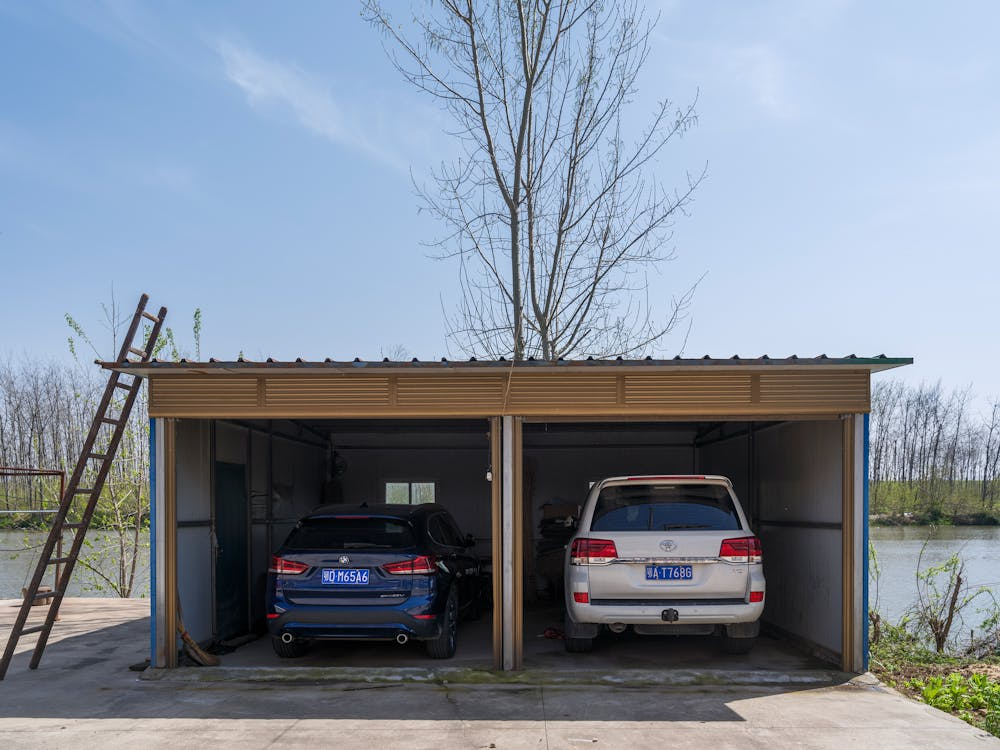

Do you want to protect your vehicle year-round?
Unless you’re vigilant about maintenance, you might not realize just how badly weather damages your vehicle until it’s too late. Weather exposure is number one culprit in prematurely aging your vehicle and lowering its value.
The problem?
Parking or storing your vehicle outside takes a toll. Faded paint, cracked dashboards, rusty doors. Yikes. And the cost to fix it? Can add up quickly.
Luckily, there’s an easy fix for most of these damage issues. Vehicle storage.
On this page:
- Why Vehicle Storage is More Important Than Ever
- Cost of Weather Exposure
- Portable Storage Buildings 101
- Features to Consider
- Choosing what works for Your Property
Why Vehicle Storage is More Important Than Ever
Climate change isn’t getting any more forgiving.
According to NOAA data, the United States saw 27 billion-dollar weather disasters occur in 2024. That breaks the previous record high of 16 events set just one year prior, when the annual average was just 9 billion-dollar disasters.
Not only are there more severe storms than ever, but they’re also costing us more money each year.
If you plan on keeping your vehicle outside for any amount of time, then you’re taking your chances with the unpredictable weather. Rain, snow, hail, intense sun…your vehicle could be damaged by Mother Nature every day you leave it outside.
Luckily, there are affordable storage options available to homeowners. For many people, portable storage buildings are becoming the perfect solution to keep vehicles out of the weather.
Expert businesses offer tailored garage buildings that are sure to fit your vehicle storage needs. Made specifically to store cars, trucks, trailers, and RVs, these storage shelters give you the protection you need to keep your vehicle safe.
Think about how much you’ve invested in your vehicle. It’s one of your largest purchases. So don’t risk ruining it by leaving it outside.
Cost of Weather Exposure
It’s a sad fact of life: moisture + metal = rust.
UV rays from sunlight can also decrease your vehicle’s resale value by up to 20%. Tiny particles in sunlight break down the exterior paint, crack rubber seals and fog windows, and ruin upholstery.
Here are some of the worst effects of weather exposure.
Bad Weather = Bad News for Your Vehicle
- Paint damage: sun exposure fades and oxidizes paint
- Dashboard cracks: extreme temperatures break down plastic
- Interior upholstery fades: remember those UV rays we talked about?
- Rust: don’t drive around with rusty panels. We get it.
- Tire wear: rubber isn’t happy when temps constantly fluctuate
- Battery death: weird charge rates in extreme temperatures kill your battery
And that’s just the stuff you can see. Poor weather protection can cause friction buildup in the engine and more.
These damage symptoms are easy to prevent with the right storage solution.
Portable Storage Buildings 101
You may be wondering…
“What the heck is a portable storage building?”
Portable storage buildings are, you guessed it, portable. They’re built to withstand inclement weather and protect vehicles from exposure. The biggest difference between a portable building and your home’s garage is that these can be moved and placed anywhere on your property.
They’re also better at what they do. Portable storage buildings give you a level of flexibility you just can’t get from a traditional garage.
Need more space? Add on to it. Want to move it across your yard? Pick it up and go.
Consider these portable storage options:
- Metal carport: these open-air shelters prevent rain and sun damage
- Garage buildings: fully enclosed storage for any weather condition
- Lofted storage buildings: Indoor space with storage room above it
- Garage + shed combos: Two structures in one building
They all function differently based on your storage needs.
If you live in an area with moderate summers and winters, a metal carport might work. But if Mother Nature isn’t nice where you live, a garage building is the way to go.
Garages can be made of wood, plastic, or metal. But when it comes to durability, metal buildings beat the competition.
Metallic garage buildings stand up to extreme weather better than wood structures. They don’t rot, attract pests, or decay like other materials. A metal storage building can last for decades if cared for properly.
Features to Consider
When buying a storage building, ask yourself these questions:
Does the size fit my vehicle?
I can’t stress this enough. Make sure your vehicle will fit with plenty of room to spare. Being crunched for space every time you open your car door is annoying and unnecessary.
Here’s what else you should consider:
- Climate ratings: How much snow and wind can it hold?
- Material: Is the metal powder coated? Galvanized?
- Doors: Are roll-up doors standard or optional?
- Ventilation: Does the structure allow for airflow?
- Foundation advice: Will I need to pour a concrete pad?
You’ll also want to look into customization options. Many companies offer you the ability to choose your storage building’s size, door placement, and more. Customization allows you to get exactly what you need for your property.
Another feature to keep in mind is how your storage building will be secured to the ground. Anchoring your metal building to your property keeps it from blowing away during severe weather.
Different materials require different types of anchors. Asphalt needs something different than concrete.
Foundation Considerations
We covered foundations above, but they deserve more attention.
Your building’s foundation is what it sits on.
Does it need to be on the ground? Not all buildings do. You can buy storage buildings that are freestanding.
Will I need to pour concrete? Most people choose to pour a concrete pad underneath their metal building. Concrete is strong and gives you a nice level foundation to place your storage structure on.
Other popular options include interlocking bricks, gravel, and asphalt.
You should always check with your storage provider on what foundation works best with the structure you buy. But in general, concrete pads are the standard.
Don’t have cows like us. Just pour a cement pad and you’ll be set.
Making the Investment
Investing in vehicle storage might not seem like an expense. But when you look at it as an investment in your vehicle, mentality changes.
A well-maintained vehicle that’s protected from the elements keeps more of its value over time. In fact, properly stored vehicles retain up to 40% more value after five years.
To drive that point home…
Repairing weather-related damage can get expensive.
Average costs:
- Repainting vehicle: $1,000-$5,000
- Dashboard replacement: $500-$2,000
- Rust repairs: $500-$3,000 per section
- Storage Building: Sometimes cheaper than fixing major damage
The shelter costs upfront can almost always be offset by damaging you’d have to fix otherwise.
Wrap Up
Storing your vehicle properly is the best thing you can do to protect it all year long.
Weather exposure can do a number on your vehicle. By investing in a portable storage building, you’re protecting your vehicle against UV damage, precipitation, harmful temperatures, and freak storms.
Let’s review:
- Weather damages your vehicle.
- Vehicles stored outdoors have a 3x higher risk of rust.
- Portable storage buildings have you covered.
- Metal buildings offer best protection.
- Make the smart choice and keep your vehicle out of the elements.
Don’t wait until paint starts to fade or rust spots appear. Invest in your vehicle’s future.