

Table of Contents
- How Breathalyzers Work
- Calibration and Maintenance Issues
- Human Error and Procedural Mistakes
- Medical and Environmental Factors Affecting Results
- Legal Strategies for Challenging Breathalyzer Results
- Conclusion
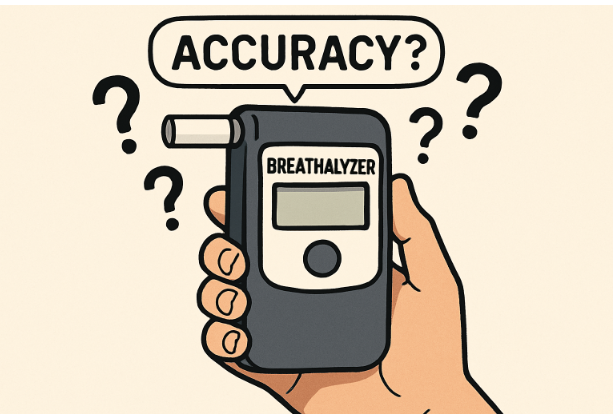
Facing a DUI charge is daunting, but many people do not realize that breathalyzer test results can be challenged in court. Issues with breathalyzer accuracy and testing procedures often significantly impact the outcome of DUI cases. An experienced DUI defense attorney challenging breathalyzer results can help you identify and leverage these common problems for your defense. Understanding breathalyzer limitations is crucial for anyone facing impaired driving charges.
While law enforcement relies heavily on breathalyzer results, these tests are far from infallible. From device malfunctions to improper administration, there are numerous ways a breathalyzer reading can be inaccurate or inadmissible. Knowing where errors can arise may give you a firmer footing in your legal battle and help prevent unjust DUI convictions.
How Breathalyzers Work
Breathalyzers are devices used to estimate blood alcohol concentration (BAC) from a person’s breath. They do this by measuring the amount of alcohol vapor in the breath and then calculating BAC through a chemical reaction or sensor technology. Law enforcement agencies routinely use these devices during traffic stops to evaluate if a driver is over the legal limit.
The science behind these devices can vary by model, but the most commonly used breathalyzers in the United States operate using infrared spectroscopy or fuel cell sensors. Despite their frequent use, reliability and accuracy can be compromised by mechanical, chemical, and human factors. In fact, even experts at CBS News have reported widespread issues with breathalyzer accuracy and calibration, leading to thousands of dismissed cases nationwide.
Calibration and Maintenance Issues
One of the most significant sources of error in breathalyzer readings is improper calibration or a lack of regular maintenance. These machines require precise, regular calibration to deliver accurate results. If law enforcement fails to maintain a detailed maintenance record or incorrectly calibrates the machine, the BAC readings can be substantially off.
Breathalyzers must be checked and recalibrated periodically to ensure their accuracy. Failure to follow strict protocols can allow an attorney to argue that unreliable equipment produced the test result, potentially leading to the exclusion of the evidence in court. Moreover, records of calibration, storage, and repairs are often required as evidence of proper device upkeep.
Human Error and Procedural Mistakes
Technical flaws are not the only source of unreliable breathalyzer readings. Operator errors and procedural lapses are also common. Law enforcement officials must be trained and certified to administer the test correctly, and they must adhere to a strict, step-by-step procedure during every encounter. Missing even a single step can render the results questionable.
For instance, officers are usually required to observe the individual for a specific period before administering a breath test to ensure that no alcohol or foreign substance has entered the mouth, such as mouthwash or breath spray, which can cause falsely high results. Mistakes such as improper observation periods, misrecorded results, or failure to follow manufacturer instructions are grounds for challenging test accuracy.
Medical and Environmental Factors Affecting Results
Medical conditions and environmental variables can lead to false positives or inaccurately high BAC readings. For example, individuals with gastroesophageal reflux disease (GERD), diabetes, or specific diets (like keto) can have substances in their breath that mimic alcohol, leading the device to register alcohol when there is little or none present. Additionally, environmental contamination from ambient alcohol sources, such as paint or gasoline fumes, can distort results.
Another issue arises if the test is administered too soon after drinking. Alcohol residues in the mouth can skew results higher than the actual BAC. Understanding these physiological and environmental factors allows a defense attorney to argue that a breathalyzer reading may not be a true reflection of the driver’s actual impairment.
Legal Strategies for Challenging Breathalyzer Results
There are several proven legal strategies for contesting breathalyzer evidence in a DUI case. Defense attorneys frequently request calibration records, officer training logs, and documentation of the entire administrative process. If discrepancies or irregularities appear in any of these records, the results could be excluded as evidence altogether.
Other strategies include cross-examining officers about their training, exposing gaps in chain-of-custody documentation, or showing that the defendant has a medical condition that undermines the reliability of the results. Sometimes, bringing in independent experts or forensic toxicologists to review test procedures and results provides additional grounds for suppressing unreliable evidence.
Conclusion
Breathalyzer evidence plays a central role in DUI prosecutions, but it is not as foolproof as many believe. From calibration problems to operator error and medical confounders, there are many avenues for defense. Anyone charged with drunk driving should understand these common problems and consult a knowledgeable attorney to build a strong defense against unreliable breathalyzer evidence. For comprehensive information on DUI defense strategies and legal developments, CBS News offers more profound insight into breathalyzer controversies and accuracy challenges.