
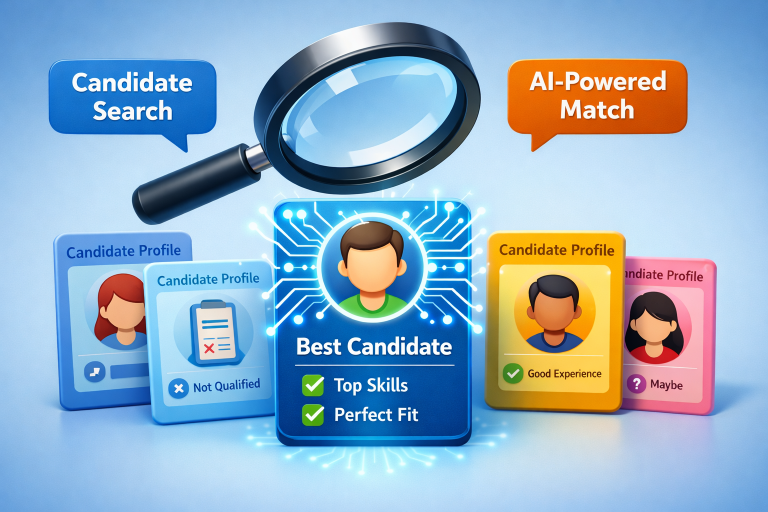

Key Takeaways
- Smart candidate matching streamlines talent acquisition by leveraging artificial intelligence.
- AI integration boosts hiring efficiency, minimizes bias, and supports cost-effective operations.
- Companies deploying AI report shorter hiring cycles and higher-quality candidates.
Table of Contents
- Understanding Smart Candidate Matching
- The Role of AI in Modern Recruitment
- Benefits of AI-Powered Candidate Matching
- Real-World Examples of Successful Implementation
- Challenges and Considerations
- Best Practices for Implementing AI in Recruitment
- Future Trends in AI-Driven Hiring
- Conclusion
In today’s fiercely competitive job market, organizations are seeking ways to identify top talent both quickly and accurately. While traditional recruitment methods still have their place, they often struggle to keep up with the pace and complexity of modern hiring demands. This is where smart candidate matching comes into play. Leveraging technologies such as artificial intelligence, this approach automates and elevates the entire process, delivering greater efficiency and dramatically improved hiring outcomes. In addition to optimizing workflows, smart matching also makes processes such as candidate identity verification more robust and secure, further strengthening hiring practices.
Smart candidate matching brings the power of data-driven decision-making to the world of recruitment. By automatically analyzing applications and cross-referencing qualifications with job requirements, recruiters can more easily uncover hidden gems within their talent pools. AI technologies remove many of the hurdles in manual review processes, such as unconscious bias, limited reach, and fatigue-related errors. As a result, organizations can benefit from a larger, more accurately screened pool of potential hires.
Though companies are steadily adopting AI-driven tools, the shift involves more than just plugging technology into existing workflows. Proper implementation requires both technical know-how and an understanding of organizational needs to ensure a seamless transition. Leaders who have embraced smart matching report impressive results: reduced time-to-hire, significant cost savings, and greater workplace diversity.
Beyond the speed and precision benefits, smart candidate matching is redefining standards for fair and equitable hiring. Through automation, teams can offer a consistent experience to all candidates while freeing up valuable human resources for higher-level work, like relationship building and strategic decision-making. As highlighted by a recent Forbes article, these collective changes are modernizing the workforce at an enterprise scale.
Understanding Smart Candidate Matching
Smart candidate matching uses artificial intelligence, algorithms, and machine learning to automate and optimize the process of pairing job seekers with open positions. Unlike manual screening, which is time-consuming and prone to human error, AI can systematically process hundreds or thousands of applications and evaluate them against a comprehensive set of criteria. This allows recruiters to efficiently focus on shortlisted, ideally suited candidates, maximizing their chances of hiring the right fit for each role.
The Role of AI in Modern Recruitment
The influence of AI within recruiting is both deep and widespread. AI-powered tools can scan resumes, score candidates against job descriptions, and even predict future job success based on previous employment trends and social signals. This not only accelerates the screening phase but also ensures that decision-making is consistent, fair, and grounded in objective data. According to a recent SHRM article, companies using AI for hiring have experienced substantial reductions in both bias and time-to-hire, creating a win-win for businesses and candidates alike.
Benefits of AI-Powered Candidate Matching
- Efficiency: AI-driven screening tools allow recruiters to handle large candidate volumes with ease, drastically reducing manual workload and review times.
- Accuracy: Intelligent algorithms analyze not just skills and experience, but also nuanced factors such as culture fit, thereby selecting candidates with greater precision.
- Bias Reduction: AI offers data-driven evaluation, reducing the subjectivity and bias risk inherent in human-led assessments.
- Cost Savings: By shortening hiring cycles and reducing the risk of poor-fit hires, organizations can achieve significant savings in recruitment and training expenses.
Real-World Examples of Successful Implementation
Industry success stories highlight the tangible value of smart candidate matching. For instance, TechFlow Solutions’ implementation of AI-driven systems slashed their average time-to-hire by 65 percent while boosting match accuracy by 92 percent. This yielded annual savings totaling $180,000. These outcomes are not isolated; organizations across industries are reporting similar results by harnessing intelligent recruitment platforms, as noted in the 2024 Harvard Business Review analysis.
Challenges and Considerations
Despite its many upsides, smart candidate matching presents several important considerations. Data privacy must remain a top priority, requiring robust protocols to ensure sensitive information is handled securely. Companies must also commit to regularly auditing their AI models to address potential algorithmic bias and ensure fair outcomes for all candidates. Finally, seamless integration with existing recruitment workflows is essential for optimal performance and adoption across hiring teams.
Best Practices for Implementing AI in Recruitment
- Define Clear Objectives: Set measurable goals for what your organization wants to achieve with AI, such as faster turnaround or greater diversity.
- Choose the Right Tools: Select AI-driven platforms that closely align with your recruitment needs, prioritizing scalability and ease of use.
- Train Your Team: Equip your recruiters with the knowledge and resources to leverage AI solutions effectively in their day-to-day work.
- Monitor and Evaluate: Continually assess AI performance against your goals and make adjustments as needed to drive continuous improvement.
Future Trends in AI-Driven Hiring
Looking ahead, the convergence of predictive analytics and natural language processing promises to refine candidate matching processes further and enhance the candidate experience. As these technologies advance, expect smarter, more intuitive tools that not only find the best candidates faster but also reserve a human touch for final decision-making. The trajectory suggests that as organizations invest more in AI and data, the recruitment process will become more transparent, inclusive, and effective.
Conclusion
Smart candidate matching is reshaping hiring for organizations everywhere by introducing more efficient, accurate, and equitable practices. By embracing AI and automated technologies, businesses can identify and secure the finest talent in a challenging market, all while reducing costs and improving satisfaction for both recruiters and candidates.