

Key Takeaways
- Paintless Dent Repair (PDR) preserves the original factory finish of vehicles.
- Advancements in PDR techniques have expanded its applicability to various dent types.
- PDR is cost-effective and time-efficient compared to traditional repair methods.
- Understanding the limitations of PDR is crucial for determining its suitability.
Introduction
Keeping a vehicle in top shape is important for both its longevity and resale value. Unfortunately, dents and dings are common issues that most car owners face over the life of their vehicles. Traditional repair solutions often involve processes such as sanding, body filler, and repainting, which can be expensive and time-consuming. This is where Paintless Dent Repair (PDR) stands out, offering a modern, efficient alternative to conventional methods while preserving the car’s original paintwork. For residents in Alberta, insurance-approved paintless dent repair in Calgary brings expert help that speeds up restoration while keeping costs manageable. The primary advantage of PDR is that it addresses minor dents without altering the car’s factory finish. Professional technicians use precision tools to gently work out the dents from the underside of the vehicle’s panels, leaving no trace of damage when executed correctly. The absence of new paint or fillers means the results are both visually appealing and durable, making this method particularly popular for owners seeking to preserve both value and appearance.
PDR can be used for a variety of small dents, especially those where the paint has not been cracked or chipped. The effectiveness of this technique has recently been enhanced by the development of new methods, further expanding the range of dents that can be fixed. Compared to older approaches, PDR not only offers cost savings but also greatly reduces downtime. Most minor repairs are completed in just a few hours, allowing owners to get back on the road more quickly. Its popularity has also increased as more consumers and insurance companies recognize the procedure’s impressive results and eco-friendly process, which avoids paint waste and chemical use.
What Is Paintless Dent Repair?
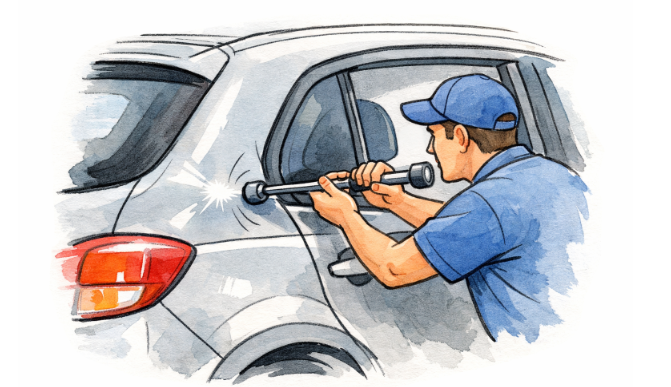
Paintless Dent Repair is a specialized process that removes minor dents and dings without disturbing the vehicle’s paint. By accessing the dent from behind, skilled technicians manipulate the metal using custom tools designed for accuracy and minimal intrusion. The process is ideal for addressing common issues such as hail damage, door dings, and minor creases, provided the exterior coating is undamaged. In many cases, the repair restores the affected area to its pre-dent condition, which is especially valuable for maintaining a car’s original surfaces.
Advancements in PDR Techniques
The scope of PDR continues to grow, thanks to innovations that enable technicians to tackle a broader range of dents and damage patterns. One of the most significant developments is glue pulling, which is now widely used when access to the rear of a panel is difficult. This method involves attaching specialized tabs to the surface of the dent with a strong adhesive; the dent is then carefully pulled outward, often requiring several incremental adjustments for optimal results. These modern approaches allow for greater flexibility and effectiveness. For example, even dents near structural supports or other challenging locations can sometimes be addressed with customized tools and new adhesive techniques. Such advancements have made PDR suitable for more vehicle makes and models, enabling body shops and technicians to deliver customers quicker, higher-quality service.
Benefits of Choosing PDR
Opting for Paintless Dent Repair provides a lineup of important advantages for car owners:
- Preservation of Original Paint: With no need for repainting, the car’s exterior remains factory-perfect, which is crucial for both appearance and maintaining resale value.
- Cost-Effectiveness: Reduced labor and material needs make PDR a more affordable solution than traditional body work. This also keeps insurance claims and out-of-pocket expenses lower for minor damage.
- Time Efficiency: Most PDR jobs are completed in less than a day, often within hours, allowing vehicle owners to minimize disruption to their schedules.
- Environmental Friendliness: Unlike repainting, PDR avoids the use of potentially harmful chemicals and paint, making it a greener choice for conscientious car owners. The U.S. Department of Energy has highlighted the environmental impact of reducing volatile organic compounds in auto repair processes.
Limitations of PDR
Despite its multiple benefits, Paintless Dent Repair is not suitable for every situation. Dents that have caused chipped, cracked, or missing paint cannot be repaired with PDR, as the technique does not address paint imperfections. This limitation also applies to sharp creases, deep dents that stretch the metal, or those at the very edge of a panel, where access is limited, and repair can be more challenging or even impossible. The vehicle’s make, metal thickness, and exact dent position also impact the feasibility of the technique. In such cases, traditional repair methods might be the better, or only, choice.
Real-Life Applications and Industry Trends
The growing use and acceptance of paintless dent repair across the automotive industry is evident in repair shop statistics and insurance trends. For example, Black Hills Paintless Dent Repair has reported a 40 percent surge in its service requests, a rise commonly attributed to both higher insurance deductibles and increased consumer awareness of PDR’s unique benefits. This marks a significant trend in the way insurance companies and body shops handle minor collision and weather-related damage, reflecting new priorities in affordability, efficiency, and sustainability.
Conclusion
PDR has become the preferred choice for many who want to fix minor vehicle dents without sacrificing the quality of their car’s original finish. The continuous improvement of tools and methods means more dents can be repaired using this technique, with rapid turnaround times and cost savings for customers. As more drivers and insurers turn to PDR for minor collision and hail damage, understanding what it offers and its limitations is essential for making informed decisions about vehicle care.