
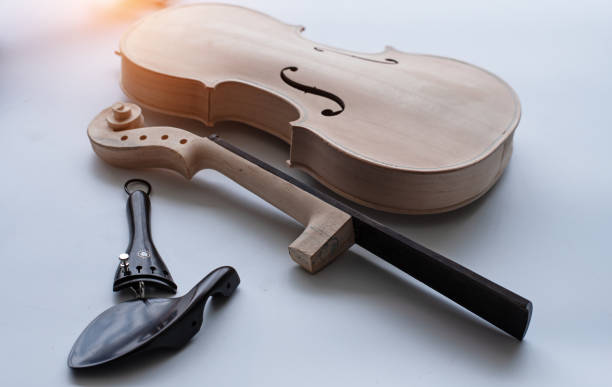

The best way to keep your violin in great shape and get better at playing it is to know what each part does. Each part of a violin affects how it sounds, how comfortable it is to play, and how well it works. So, let’s look at your instrument more closely, piece by piece, and learn what makes it sing.
The Body
The magic starts in the violin’s body. Along with the back and the ribs, the top (or soundboard) makes up the body. These parts give the guitar its famous hourglass shape.
A lot of what determines tone and sound is the wood used (usually spruce and maple) and the skill with which it was built. To put it simply, this is where the sound of your violin comes from.
The Neck and Fingerboard
The neck holds up the fingerboard and gives you the space to press and shift between notes. A smooth, properly shaped fingerboard makes it easier to glide between positions without feeling clunky. Its curvature and finish can make a world of difference in how comfortable your playing experience feels.
The Scroll and Pegbox
See the swirling design that gives your violin a touch of grace? It is called the scroll. You can see it on top of your violin. The pegbox, which holds the tuning pegs, is right below it. You can fine-tune your sound with these pegs that control how tight the strings are. If the pegbox and pegs are well-made, the setting will go more smoothly, and there will be fewer annoying slips.
Strings and Bridge
Your violin’s strings are its voice cords. Know that different string materials (like gut, steel, or synthetic) affect how bright, warm, or powerful your sound is.
The bridge is that little curved wooden piece between the f-holes—it might look simple, but it does a lot. It carries those string vibrations to the body ( just how your violin makes sound) and keeps the strings at just the right height so it’s comfortable to play and sounds great.
Tailpiece and Chinrest
Then, there’s the tailpiece. It is the part that holds the strings down at the bottom of your violin. Today, you can see a lot of modern ones have built-in fine tuners to make pitch adjustments super hassle-free.
Aside from that, we have the chinrest. This part is all about comfort as it gives your jaw and neck a steady spot to rest so you can focus on playing instead of constantly shifting your grip.
Bow and Accessories
A violin isn’t complete without its bow, of course. You can change the tone, volume, and attitude with the bow; it’s like a paintbrush. Don’t forget the rosin either. This lets the bow hair grip the strings so that sound can be made.
Also, don’t forget that you need a sturdy case, an arm rest, and a cleaning cloth to keep your instrument safe and in good shape.
Conclusion
If you know what each part of your violin does, you’ll be able to connect with it more deeply than just playing. You can take better care of your sound and get the most out of it if you know how everything works. Take the time to look at your violin from every angle. You’ll enjoy it a lot more once you understand how all of its violin parts work together to make music.