
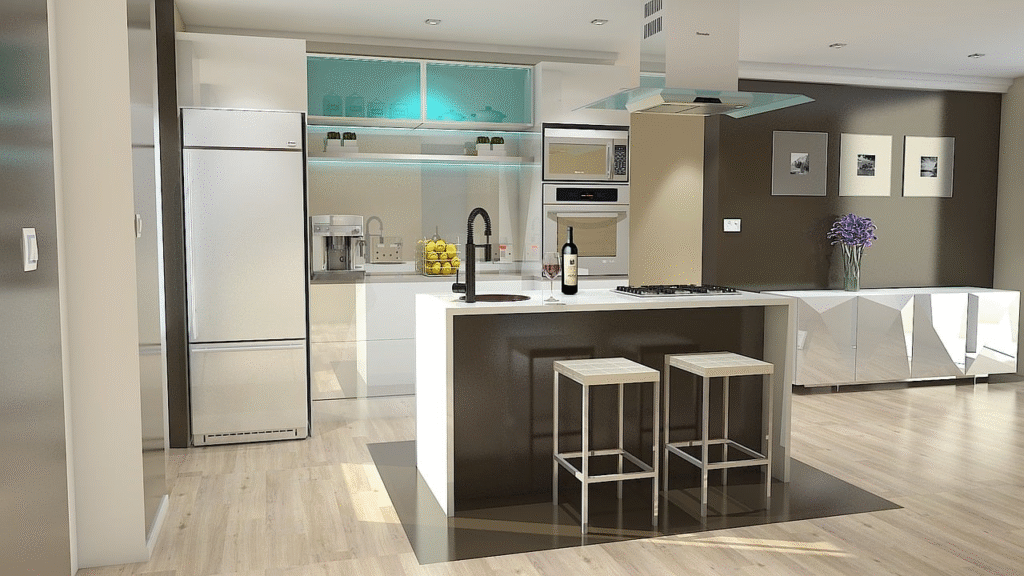

Want your open-concept space to look like it belongs in a magazine?
Open floor plans have been the norm for residential real estate for decades. Open floor plans make homes feel larger, brighter, and more connected. But there’s a problem…
Without the right lighting design, that open-concept space can start to feel flat, cold, and uninviting.
The good news?
The right lighting design can make your open-concept home look and function completely differently. Lighting can zone spaces without walls, create ambiance, and even add value to your property.
Key Takeaways
- Why Lighting Matters So Much in Open Plan Spaces
- The Layered Lighting Strategy That Works Best
- Defining Zones in an Open Floor Plan Without Walls
- Smart Lighting Features to Consider
- Energy Efficiency Tips That Save Money
Why Lighting Matters So Much in Open Plan Spaces
Open-concept spaces are simply a combination of the kitchen, dining, and living areas that are all in one expansive room.
The design looks great in blueprints. But in reality, it poses a unique challenge…
How do you light multiple functional zones without making the entire area feel like an airport terminal?
Enter proper lighting design. Lighting design is an absolutely essential component to interior design and home decor. Investing in luxury lighting can take an open floor plan from drab to dazzling. Good fixtures do more than light a space. They also serve as attractive focal points that anchor the different zones throughout the area.
The National Association of Home Builders reports over 80% of homeowners want at least a partially open setup with the kitchen and dining areas combined. The preference of modern real estate consumers is clear.
The truth is…
A lack of lighting can make an open and expansive space actually feel smaller and more cramped. Strategic lighting design does the opposite. It visually expands boundaries and creates depth throughout the space.
The Layered Lighting Strategy That Works
Professional interior designers know that layered lighting works best. Layered lighting is simply a term that describes combining three kinds of lights in a balanced approach.
Ambient lighting provides the overall illumination for a space. Recessed ceiling lights and large chandeliers that wash a space in soft, even light are examples of ambient fixtures.
Task lighting focuses light on specific areas where work happens. Pendant lights over kitchen islands, under cabinet lights for countertops, and reading lamps near seating areas are examples of task lighting.
Accent lighting is what it sounds like. It’s lighting that adds drama and highlights features in a space. Wall sconces, track lighting pointed at artwork, and LED strips behind shelving all create visual interest.
The key to using this method in open-concept spaces? Balance.
Too much ambient light makes a space feel flat and boring. Too much accent lighting makes a space feel chaotic and cluttered. When ambient, task, and accent lighting work together in the right proportions, the magic happens.
Defining Zones in an Open Floor Plan Without Walls
One of the biggest challenges in an open floor plan is creating zones for different activities without building walls.
Lighting is the perfect solution.
Let’s take a look at some methods for doing this.
- Pendant clusters over a dining table immediately signify that “this is where we eat”
- Recessed lighting at different heights visually separates kitchen and living areas
- Floor lamps in conversation areas create intimate spaces within a larger room
- Statement chandeliers or fixtures anchor specific zones and draw the eye
The trick to making this work? Using different fixtures and light temperatures to set each zone apart. Cooler, brighter lights make sense in kitchen spaces where cooking happens. Warmer, dimmer lights are better for living and dining spaces where relaxation is the focus.
Use light to create invisible walls that direct people through the space and communicate what each zone is for.
Smart Lighting Features to Consider
Smart lighting is the modern evolution of home lighting technology. Automated controls make it easier than ever to control your open-concept space effectively.
Dimmable fixtures are a must. The ability to adjust light levels throughout the day is a huge advantage. Brighter light in the morning helps with coffee and breakfast. Softer light in the evening creates a more relaxed atmosphere for dinner and conversation. In multi-purpose spaces, this level of adaptability is key.
Automated controls take this a step further. Motion sensors can automatically turn on lights as you move from zone to zone. Programmable scenes allow you to change from “cooking mode” to “movie night” at the touch of a button.
Color-tunable bulbs are also a great option. This technology lets homeowners fine-tune the warmth or coolness of light to match the time of day or desired mood. Color-tunable lights also mimic natural daylight more closely and support healthy circadian rhythms.
Smart technology also provides convenience and energy management benefits. Being able to control lights via a phone app means never accidentally leaving them on. Energy usage can also be easily monitored to find and correct waste.
Energy Efficiency Tips That Save Money
Lighting accounts for about 15% of the average home’s electricity consumption, according to the Department of Energy. For large open-concept spaces with lots of fixtures, that number can get even higher.
The solution? LEDs.
LED lighting uses at least 75% less energy than incandescent bulbs and last up to 25 times longer. In open floor plans with lots of light sources, the time and cost savings add up quickly.
A few more practical tips for saving on energy include:
- Use natural light as much as possible by keeping window treatments minimal and reflecting light with certain surfaces
- Install dimmers on all light fixtures because running them at 50% uses about half the power
- Choose ENERGY STAR fixtures which meet strict energy efficiency guidelines
- Use daylight harvesting sensors to automatically dim electric lights when ample natural light is available
Households that switch to LED lighting save an average of $225 per year in energy costs. In a large open-concept space with dozens of fixtures, the savings multiply.
Bringing It All Together
Designing lighting for an open-concept space is not rocket science. But it does require a little planning.
Start by identifying the unique functional zones in the floor plan. Next, apply the layered lighting method to each area. Then use different fixture styles and temperatures to visually separate zones without walls.
Invest in smart controls for maximum flexibility. Finally, always prioritize energy-efficient LED lighting to keep operating costs down.
The right lighting plan takes an open floor plan from barren and echoey to cozy and inviting. The lighting of a space also defines space, creates ambiance, and supports how people actually live in modern homes.
When building new or renovating existing real estate, lighting should never be an afterthought. Lighting is the design element that brings everything together and makes open-concept living shine.