

When industrial equipment fails earlier than expected, maintenance is usually the first area blamed. Schedules are reviewed, inspection intervals are shortened, and service procedures are revised. While maintenance is undeniably important, it is rarely the primary reason why equipment reaches the end of its service life too soon.
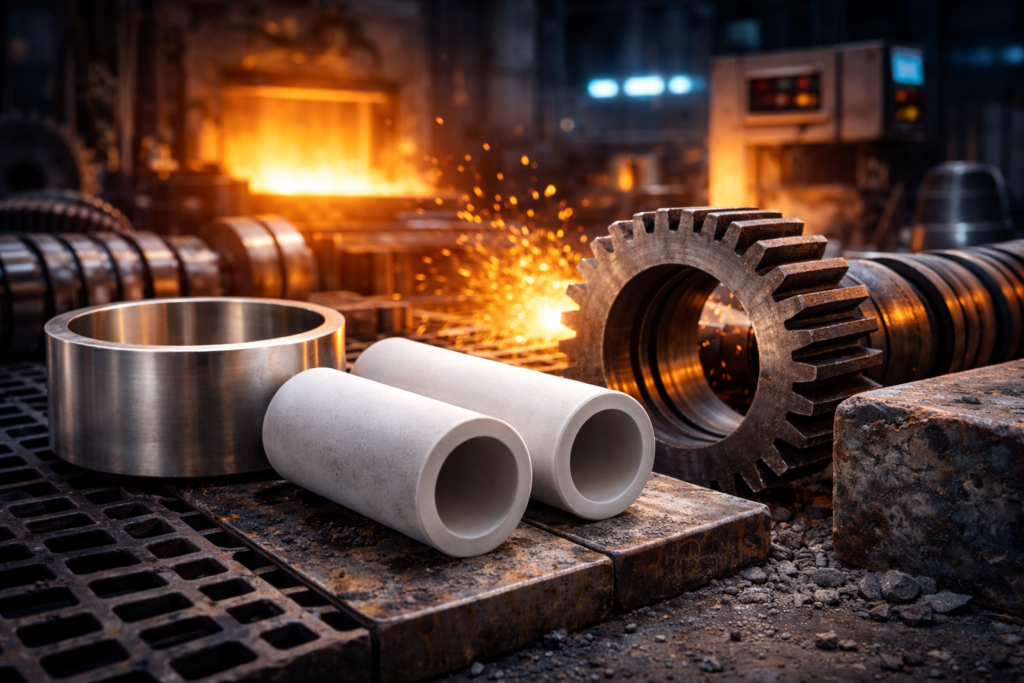
In reality, longevity is largely determined long before maintenance teams ever interact with a system. The materials selected during design and manufacturing define how equipment responds to heat, load, corrosion, and continuous operation. In demanding environments, material-grade alumina tubing that supports extended equipment service life under continuous industrial use illustrates how material quality can influence durability in ways that maintenance practices alone cannot replicate.
This distinction matters because maintenance is reactive by nature, addressing wear after it occurs. Material quality, by contrast, is preventive—it determines how slowly degradation develops in the first place.
The Limits of Maintenance as a Longevity Strategy
Maintenance programs are designed to preserve function, not to alter material behavior. Lubrication reduces friction, inspections detect damage, and replacements restore performance, but none of these actions change how materials fundamentally respond to stress.
In high-temperature, chemically aggressive, or mechanically demanding environments, materials can degrade internally even when equipment appears to be operating normally. Microstructural changes, slow oxidation, and dimensional drift often occur between inspection cycles. By the time maintenance identifies a problem, the underlying material damage may already be irreversible.
This explains why equipment that is rigorously maintained can still experience premature failure when material properties are mismatched with operating conditions.
Why Material Quality Sets the Lifespan Ceiling
Material quality establishes the upper limit of how long equipment can realistically operate. Once a system is built and deployed, maintenance can only manage degradation within the constraints imposed by the material itself.
High-quality materials are defined not just by initial strength, but by long-term stability. Critical characteristics include:
- Resistance to prolonged heat exposure
- Dimensional stability during thermal cycling
- Chemical inertness in corrosive environments
- Mechanical integrity under continuous load
When these properties are inherent to the material, degradation progresses more slowly and predictably. Maintenance efforts become more effective because they are not constantly compensating for material weaknesses.
Longevity Is Decided Earlier Than Most Failures Appear
Many failure investigations focus on the final breakdown event. However, the conditions that make failure inevitable are often established years earlier during material selection.
Two systems operating under similar loads can age very differently. One may run reliably with minimal intervention, while the other requires frequent repairs and still suffers from recurring issues. The difference often lies not in how they are maintained, but in how well their materials tolerate real-world operating environments.
Once equipment is in service, replacing unsuitable materials is rarely practical. This makes early material decisions disproportionately influential over the system’s total lifespan.
Evaluating Materials for Long-Term Behavior
Short-term testing confirms whether a material meets specifications at a given moment. Long-term reliability depends on how materials behave after thousands of hours of exposure.
To understand aging behavior, materials are often evaluated under sustained stress conditions. In industrial and laboratory settings, alumina crucible components applied in long-duration thermal and material aging evaluations are commonly used to observe how materials respond to extended heat exposure and repeated thermal cycles.
These evaluations help identify slow degradation mechanisms that routine qualification tests may overlook, enabling more informed material choices.
Maintenance Works Best When Materials Are Right
This does not diminish the importance of maintenance. On the contrary, maintenance delivers the greatest value when paired with appropriate materials. High-quality materials reduce the frequency and severity of maintenance issues, allowing service efforts to focus on optimization rather than constant correction.
When material quality is insufficient, maintenance becomes a cycle of intervention without resolution. Components are replaced, but failures recur because the underlying material limitations remain unchanged.
The Cost Perspective: Longevity and Total Ownership
From a cost standpoint, equipment lifespan directly affects total cost of ownership. Frequent downtime, emergency repairs, and shortened replacement cycles increase operational expenses and disrupt planning.
Investing in material quality upfront often lowers these downstream costs. Systems built with durable materials experience fewer unexpected failures, more predictable maintenance schedules, and longer service intervals. Over time, this shifts maintenance from a reactive expense to a strategic asset.
Rethinking Longevity from the Start
Extending equipment lifespan requires rethinking where longevity is truly created. Rather than treating maintenance as the primary defense against failure, organizations should view material quality as the foundation of durability.
Key questions to consider early include:
- How will this material behave after years of thermal and mechanical stress?
- What degradation mechanisms are likely under actual operating conditions?
- Can maintenance realistically mitigate these effects, or only manage their consequences?
Addressing these questions early allows maintenance strategies to succeed instead of struggle.
Final Thoughts
Maintenance keeps equipment running, but material quality determines how long it can run. When materials are selected with long-term behavior in mind, degradation slows, failures become more predictable, and equipment lifespan extends naturally.
In industrial systems where reliability and uptime matter, longevity is not created in the maintenance schedule. It is built into the materials from the very beginning.