
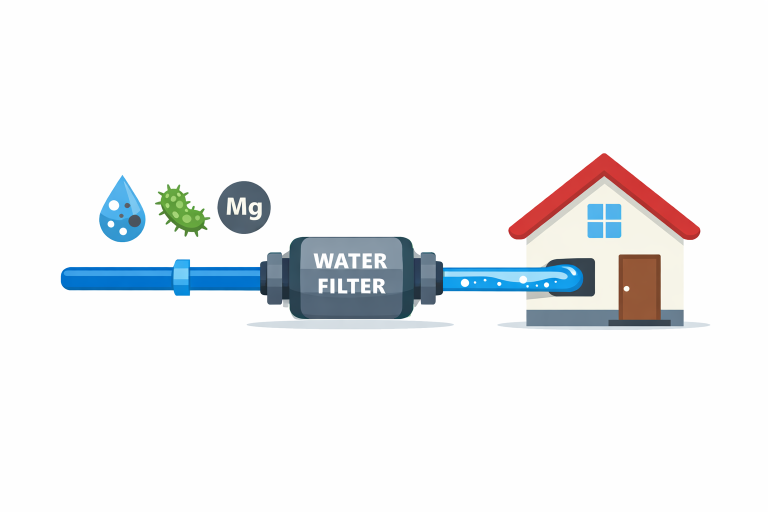

Key Takeaways
- Understand your water quality by conducting a comprehensive water test.
- Identify the specific contaminants present in your water supply.
- Choose a filtration system tailored to effectively address those contaminants.
- Consider factors such as flow rate, filter lifespan, and maintenance requirements.
Table of Contents
- Understanding Your Water Quality
- Identifying Common Contaminants
- Types of Whole House Water Filters
- Key Factors to Consider
- Installation and Maintenance
- Cost Considerations
- Conclusion
Ensuring clean, safe water throughout your home is essential for your family’s health and the longevity of your plumbing system. Choosing the right whole-house water filter requires understanding your unique water quality and selecting the filtration solution that best fits your household’s needs. If you are searching for solutions, you can learn more about whole house water filtration systems in Atlanta Georgia to see what options are available in your area.
Many households face challenges from contaminants that can compromise health and damage appliances. With the right information and a systematic approach, you can confidently select a filter that protects everyone in your home and helps maintain your plumbing system for years to come.
Understanding Your Water Quality
Before investing in a whole-house filter, it is crucial to understand what exactly is in your water. Conducting a detailed water test allows you to identify the contaminants present, so you can choose a system that effectively addresses them. If you are connected to a municipal water supply, review your utility’s annual Consumer Confidence Report for an overview of regulated and unregulated substances in your water. Homeowners with private wells should consider professional water testing to detect bacteria, heavy metals, and other potential contaminants.
Interpreting water test results is the foundation for your entire selection process. It guides every step, from matching filter technology to the contaminants you have to evaluating performance and maintenance requirements. The Centers for Disease Control and Prevention (CDC) offers comprehensive guidance on water quality and your health, and what common results mean for health and safety.
Identifying Common Contaminants
Household water can be affected by a range of impurities, which vary based on local sources and plumbing infrastructure. Some of the most common contaminants include:
- Chlorine and Chloramines – Common in municipal supplies to disinfect but may affect taste and odor.
- Lead – A hazardous metal often found in homes with old pipes and solder.
- Sediment – Tiny particles such as sand, silt, or rust that can clog plumbing and appliances.
- Iron and Manganese – These metals stain fixtures and impact the taste and appearance of water.
- Bacteria and Viruses – Microorganisms that may be present in untreated well water and can cause illness.
By focusing on what is actually present in your water, you avoid under- or over-investing in unnecessary filtration technology.
Types of Whole House Water Filters
Whole-house filters are available in various formats, each with strengths that address different impurities:
- Carbon Filters – Ideal for removing chlorine, certain chemicals, and improving water taste and odor. Activated carbon models are effective against a broad range of pesticides and industrial solvents.
- Reverse Osmosis Systems – Comprehensive in their ability to strip out many dissolved solids, heavy metals, and some microorganisms, though they use more water and typically cost more up front.
- UV Purifiers – Harness ultraviolet light to neutralize bacteria and viruses, providing an important safeguard for health, especially in homes that use well water.
- Iron and Manganese Filters – Specially designed systems that target and remove these staining metals from incoming water and help protect plumbing infrastructure.
The best filtration solution for your home will depend on your unique contaminant profile and your household’s priorities.
Key Factors to Consider
Comparing whole-house filters requires focusing beyond contaminant reduction. Take into account the following performance and practical factors:
- Flow Rate – Choose a system that can accommodate your household’s peak usage hours. An undersized system can lead to pressure drops and frustration.
- Filter Lifespan – Find out how long filters last and how often they need to be replaced. Frequent filter changes add significantly to ongoing costs.
- Maintenance Requirements – Some units require more frequent cleaning or monitoring. Consider whether you prefer a hands-off operation or are comfortable doing more regular upkeep.
- Certification – Look for certifications from reputable organizations like NSF International, which ensure filters are rigorously tested to meet performance and safety standards. The Environmental Protection Agency (EPA) offers a helpful resource for understanding water treatment technologies.
Installation and Maintenance
Proper installation is key to the performance of your chosen water filter. Some whole-house systems are straightforward enough for qualified professionals to install confidently, but complex or high-capacity systems require the expertise of professionals to ensure safety, compliance, and warranty validity. Routine maintenance tasks such as replacing filter cartridges, cleaning components, and performing periodic performance checks are necessary to maintain optimal water quality. Neglecting maintenance can quickly reduce the effectiveness of your investment and allow contaminants to reenter your water supply.
Cost Considerations
Whole-house water filtration systems range from a few hundred dollars for basic sediment or carbon models to several thousand dollars for advanced reverse osmosis or multi-stage solutions. In addition to installation, budget for filter replacements and routine maintenance, which can vary by type and household consumption. While the initial investment may seem substantial, a high-quality system can prevent costly plumbing repairs, protect appliances, and support long-term health outcomes.
Conclusion
Choosing the right whole-house water filter starts with understanding your water supply and identifying the specific challenges your home faces. From there, you can target those issues with proven filtration technologies that deliver the clean, safe water your family depends on. By weighing flow rate, maintenance, cost, and third-party certifications, you ensure your investment produces reliable, high-quality water from every tap. If you are looking for more visual information on the topic, this YouTube guide on selecting a water filter offers step-by-step insights.

